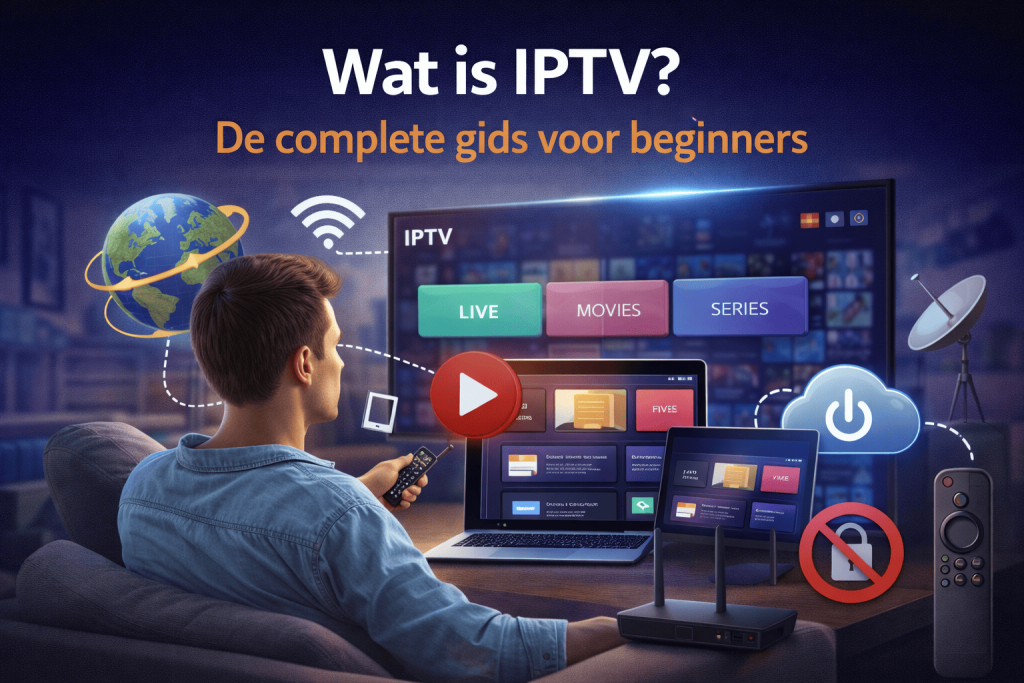
Watching television has changed drastically in recent years. In the past, we were completely dependent on large satellite dishes or expensive cable packages. Now, more and more people are watching their favorite series and live sports directly over the internet. We call this technology IPTV, or Internet Protocol Television. But what exactly does this entail and why is everyone switching en masse?
Simply put, IPTV enables you to stream television programs, movies, and live channels via your internet connection instead of a traditional signal. This internet-based approach gives you access to thousands of channels worldwide. It offers much higher picture quality, ultimate flexibility, and gives you complete control over your own entertainment.
The evolution of television: from cable to the internet
Television has come a long and fascinating way. We started with simple analog signals and antennas, moved on to digital broadcasts, and have now arrived in the era of internet streaming. In the past, you had to memorize the TV guide and rush home to watch your favorite weekly program. If you missed it, you were simply out of luck.
Modern technology has completely changed this dynamic. Thanks to advanced streaming services and robust platforms such as Dutch IPTV You can now watch exactly what you want, at the moment that suits you. Power has shifted from the sender directly to the viewer.
Why IPTV is the future of entertainment
The modern viewer demands complete control over their media consumption. You want to decide for yourself what, when, and how you watch. With IPTV, you set the schedule. You choose whether to watch a live football match, catch up on a missed episode of a reality show, or stream a blockbuster in razor-sharp 4K resolution.
We no longer have to worry about fixed broadcast schedules or cumbersome recording equipment taking up space in the living room. You get pure convenience delivered directly via your Wi-Fi or internet connection.
How exactly does IPTV work?
The technical side: streaming via IP networks
While traditional TV transmits signals via cables or satellite waves, IPTV uses exactly the same technology that powers your web browser and mobile apps. It transmits video data via IP (Internet Protocol). When you select a program, the service breaks the video down into small data packets and sends them to your device over the internet. As long as you have a stable internet connection, these packets are immediately reassembled on your screen, allowing you to stream high-quality video with minimal delay.
Different types of IPTV services
By understanding the different formats, you get the most out of your viewing experience. Most premium services offer a combination of three main formats:
Live IPTV
Just like with traditional television, this format allows you to stream live broadcasts in real-time over the internet. This is absolutely indispensable for watching live sporting events, the latest news, and special live reports.
Video on Demand (VOD)
This format functions like a giant digital video library. You browse through an enormous library of movies and TV series and play them whenever you feel like it. It works similarly to well-known streaming apps, but is directly integrated into your television provider's platform.
Time-Shifted TV
Did you miss an important broadcast while you were working? With time-shifted media, you can watch previously broadcast content whenever it suits you. This feature allows you to rewind live television, pause your current program to grab a drink, or watch a series that aired a few days ago.
The biggest benefits of IPTV for users
Switching to internet television offers various enormous advantages over traditional methods:
- Enormous content offering: When you choose a reliable Dutch IPTV provider, you get direct access to thousands of international and local channels that a traditional cable company could never offer.
- Superior picture and sound: Because it uses broadband data, many premium services effortlessly support ultra-high-definition 4K and even 8K streaming formats.
- Total flexibility: You are not tied to your living room. You can watch your channels on your smartphone while traveling, on your tablet in bed, or simply on your Smart TV.
- Major cost savings: Internet television subscriptions almost always cost significantly less than expensive cable packages or satellite equipment.
IPTV versus traditional television
How exactly does it compare to the old way of watching TV? Here is a simple overview:
| Feature | IPTV | Cable/Satellite |
|---|---|---|
| Signal | Internet connection | Physical cable or dish |
| Image quality | 4K and 8K possible | Often severely compressed/restricted |
| Flexibility | Watch anywhere, on any device | Limited to a specific room/TV |
| Price | Very affordable | Expensive, often hidden costs |
| Features | On-demand, pause, rewind live TV | Very limited without extra equipment |
How do you choose the best IPTV subscription?
The market is flooded with various providers, so choosing the right one requires some research. When looking for a high-quality subscription, always pay attention to the following points:
- Reliable servers: Look for providers that guarantee high uptime and minimal buffering, so that your live sports don't freeze at a crucial moment.
- Excellent customer service: Ensure that they offer responsive customer service, preferably in your native language, to help you set up your devices.
- Broad device compatibility: The service must work smoothly on your specific Smart TV, streaming stick, or mobile phone.
- Well-organized channel packages: Check if they offer the specific sports, news, and entertainment channels that you actually want to watch.
Is using IPTV legal?
This is one of the most frequently asked questions by new users. The technology itself is completely legal; it is simply a method for transmitting data. However, not all services operate legally.
The law makes a clear distinction between official providers who pay for broadcasting rights and illegal parties that steal streams. Using an internet television service is legal, as long as your chosen provider holds the correct licenses and distribution rights for the content they offer. Always do thorough research before taking out a long-term subscription.
Common mistakes to avoid
If streaming television is new to you, try to avoid these common beginner mistakes:
- Choosing the cheapest provider: Extremely cheap services often overload their servers, leading to constant freezing and buffering.
- Ignore internet requirements: You need a strong, stable broadband connection. We recommend connecting your streaming device via an Ethernet cable for the best results.
- Security forgotten: Always use a reliable VPN (Virtual Private Network) to protect your privacy and prevent your internet provider from throttling your streaming speed.
Popular devices and apps in 2026
You don't need to buy expensive new equipment to get started. You probably already own a compatible device. The most popular ways to check are:
- Smart TVs: Modern televisions from Samsung, LG, and Philips have special apps available directly in their app stores.
- Android TV Boxes: These special streaming boxes offer incredible speed and flexibility for running various media applications.
- Streaming Sticks: The Amazon Fire Stick and Apple TV remain wildly popular, budget-friendly options that you plug directly into any standard HDMI port.
- Mobile devices: Download special player apps on your iOS or Android smartphone to take your entertainment with you everywhere.
The future of television
The future of home entertainment looks incredibly bright. As we move further into 2026, we expect major leaps in streaming technology. Think of AI-driven content recommendations that perfectly match your taste, even faster streaming protocols that completely eliminate buffering, and highly personalized user interfaces. Providers are investing heavily in 8K broadcasting capabilities and interactive features that will blur the lines between television and gaming.
Conclusion: Make the smart choice
What is IPTV? It is the modern, flexible, and affordable way to consume media. By offering enormous advantages over outdated traditional systems — such as superior video quality, global channel access, and significantly lower monthly costs — Internet Protocol Television is the logical successor to classic cable TV.
Frequently Asked Questions (FAQs)
What exactly does IPTV stand for?
It stands for Internet Protocol Television. This simply means that you receive your television channels via your internet connection instead of via an antenna.
Do I need a fast internet connection?
Yes. For smooth viewing without buffering (especially in HD or 4K), you need a stable broadband internet connection.
Can I watch it on my regular Smart TV?
Absolutely. The vast majority of modern Smart TVs support various streaming applications that allow you to connect directly to your provider.
What is the difference between this and Netflix?
Netflix offers exclusively on-demand content (movies and series that you choose from a menu). Internet television offers on-demand content along with hundreds of live, real-time broadcast channels.
How do I find the best provider?
Focus on reliability rather than price. Read user reviews, test their customer service, and check if they offer a short trial period to test their server stability before committing for a whole year.
🔗 External source:
For more consumer information about legal streaming providers and digital rights, you can visit ConsuWijzer.nl.
 English
 Nederlands
 Nederlands (België)
 Français