
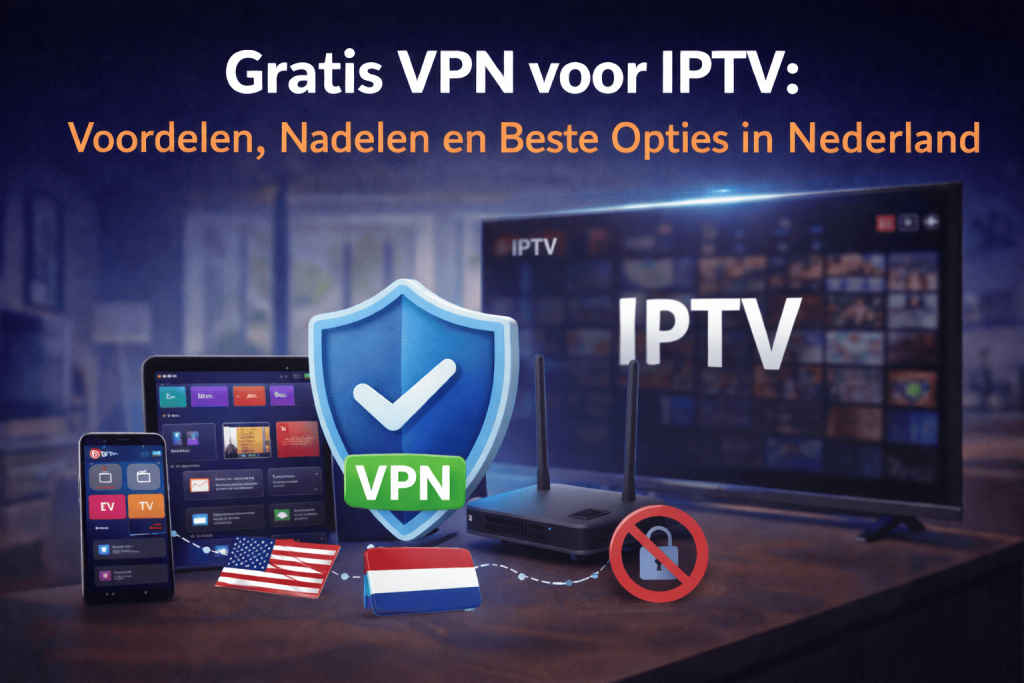
Yes, you can use a free VPN for IPTV, but it's often not an ideal solution. While it can help you bypass geoblocks and hide your IP address, free VPNs typically suffer from slow speeds, data limits, and questionable privacy. For occasional use, it's acceptable, but for long-term or HD streaming, a paid VPN is much more reliable and secure.
Internet Protocol Television, or in short IPTVIPTV is a method for streaming television channels over an internet connection instead of traditional broadcasting technologies like cable or satellite. Many people are switching to IPTV because it offers a diverse and often more affordable selection of channels. However, it's possible that certain channels or applications are blocked in your country, or you might want to prevent your internet provider from monitoring your streaming behavior.
At that point, many users think: “Why not use a free VPN?” A Virtual Private Network Can bypass blocks and hide your IP address, allowing you (in theory) to stream anonymously and without geographic restrictions. Free sounds appealing, but for IPTV, there are a few fundamental aspects to seriously consider.
Personal Experience with Free VPNs for IPTV
I still remember my excitement the first time I used a free VPN for live sports streaming via IPTV. The idea that I wouldn't have to pay for extra protection and bypassing blocking was music to my ears. Initially, it went quite smoothly: I could access foreign channels that weren't normally available in my region. But after a few days, I increasingly noticed the connection stuttering, buffering, or dropping out altogether. The speed fluctuated wildly, which significantly affected my viewing experience.
I also received a message several times that I'd reached my data limit. Many free VPNs suddenly impose a data limit, after which you either have to upgrade to a paid plan or wait until the next month starts. Not ideal when you're in the middle of a thrilling football match.
How Does a Free VPN Work and Why Is It Relevant for IPTV?
A VPN Creates an encrypted tunnel between your device (e.g., your smartphone, media box, or smart TV) and the VPN server. This encryption prevents third parties from reading what you stream or which websites you visit. IPTV is that relevant because:
You can bypass geographic restrictions with a VPN. You can still watch channels that are normally unavailable.
– Your IP address is hidden, which increases your online anonymity.
– Some ISPs throttle bandwidth, so a VPN can help maintain a fairer speed.
The question is: So is a free VPN just as good as a paid version?
Free VPNs can work over basic protocols like OpenVPN or IKEv2, but they often have limitations on server locations, bandwidth, and connection speeds. IPTV—where you need a stable, fast connection—this can be a deal breaker. Moreover, paid services are generally more transparent about their logging policies, which is essential for your privacy.
Pros and Cons of a Free VPN for IPTV
Using a free VPN for IPTV isn't necessarily a bad thing, but there are some clear pros and cons:
Advantages
- No extra costsIt's free, which is a deciding factor for many people.
- AccessibilityIt's easy to test whether you even need a VPN. You can experiment with geoblocking and see how IPTV channels from other countries work.
- Suitable for occasional use: If you only watch the occasional foreign sporting event, a free VPN may suffice.
Disadvantages
- Limited speedFree VPNs often limit bandwidth. This can cause buffering, which can spoil your viewing experience. This problem is particularly noticeable with popular IPTV channels where many users are trying to watch simultaneously.
- Data limitsSome providers only give you a few gigabytes per month. With Full HD streaming, that limit is quickly reached.
- Less server choice: Free VPNs offer a handful of servers, often overcrowded, leading to slowness.
- Uncertain privacySome free VPNs sell user data or display annoying ads. Always check the provider's reputation before using anything free.
- VPN blocksServices and apps that detect VPN use may block free VPN servers. This can cause instability and outages.
Security and Encryption? What About Free VPNs?
The promise of security is an important pillar of any VPN service. Encryption Makes your data traffic difficult for hackers and internet companies to read. Many free VPNs offer at least some basic encryption (e.g., AES-256). This seems robust, but the implementation can be flawed. Some free VPNs, for example, log your traffic or collect data for resale. The scope of the encryption can also be limited to standard protocols that aren't always up to date.
If you with IPTV This is even more important if it works. You're constantly sending data back and forth—it's not just a simple web page loading. A poorly secured, free VPN can result in:
– Potential data leaks.
– Insufficient protection against deep packet inspection.
– Unpredictable reliability, which can cause you to suddenly drop out in the middle of your run.
Practical Tips: How to Get More Out of a Free VPN?
However, a free VPN isn't always a no-go. If you're serious about trying it, there are some tips to get the most out of it:
- Choose a well-known providerDon't just go for the very first VPN app you see in the app store. Do some research and choose one with a solid reputation.
- Keep track of your data usage: If you plan on streaming sports or movies for hours, you'll quickly run into limits.
- Test different servers: Are you in the Netherlands but want to watch a foreign channel? Try a server in the country where the content is available. Check if the speed is sufficient.
- Install on multiple devices: Test your VPN on your phone, laptop, and TV box to see where you get the best performance.
- Check reviews and forum experiencesUser testimonials provide insight into real-world performance. They often also reveal how effective the VPN is at bypassing regional restrictions.
User Stories: Bypass IPTV Blocks With A Free VPN
I came across several stories online of people successfully using free VPN providers to IPTV from abroad. For example, someone on a forum described how he managed to tune in to an American sports channel from the Netherlands. The trick was to switch server locations when the connection slowed down. But he also mentioned that during peak times, such as major sporting events, the free VPN servers became overloaded. So he sometimes had to switch servers hilariously often during the match.
Another story was about someone who was happy with a free VPN… until it turned out this provider was injecting ads into his stream and browser traffic. No direct impact on his show, but an annoying feeling of "someone is watching." In short, experiences vary. It's worth delving into this before you decide.
The Difference Between Free and Paid VPN Services
Paid VPN services usually offer:
– High-quality, stable servers with wide bandwidth.
– Extensive number of countries and locations to choose from.
– No data limit (or a very generous limit).
– Better logging policy: often no-log, meaning that data is not stored.
– Customer service: fast help and support for problems with your connection.
For IPTV Stability is crucial. You don't have to worry about buffering or dropouts due to busy, overcrowded servers. That's precisely why some people prefer to pay for a VPN: the convenience and reliability save you a lot of frustration.
IPTV Blocks and Geoblocking: Why You Should Be Careful
Geoblocking It's the phenomenon that certain streaming services or channels are only available to users in specific regions. Examples include regional sports broadcasts, movie channels with licensing deals, or even Netflix libraries that vary by country. A VPN can often bypass this restriction.
However, not every free VPN is equally adept at bypassing geoblocking. Many major streaming platforms recognize and block the IP addresses of known VPN servers, preventing you from accessing the desired content. Or you get in, but the connection is so slow that you wonder if it's worth the effort.
Limitations of a Free VPN for IPTV: Speed, Data, and Stability
One of the biggest frustrations with free VPN in combination with IPTV is the speedStreaming high-quality video requires a lot of bandwidth. Free services often throttle this to reduce server costs.
That's precisely why some people prefer to pay for a VPN: the convenience and reliability save you a lot of frustration. But if you're curious about using a free VPN for IPTV, with the right knowledge and expectations, you can still get there. Ultimately, the key question is what compromises you're willing to make.
How to Recognize a Reliable Free VPN for IPTV?
Not all free VPN providers are inherently unreliable. However, it's important to do your research before deciding which service to use. Pay particular attention to the following points:
- Reputation and reviews: Check out the experiences of others and see if the VPN service has been in the news recently regarding security issues or privacy leaks.
- Security protocolsBasic protocols like OpenVPN or IKEv2 are fine, but pay attention to their implementation. Some free services lag behind with updates.
- Transparency about logs: A service that claims not to keep logs but doesn't mention this anywhere in its privacy statement may be suspicious.
- Limited advertisingA completely free service often makes money through advertising. This is fine to a certain extent, but be aware of how aggressive they are.
- Data and bandwidth limits: Be aware of the restrictions the provider applies, especially if you stream a lot.
If you find that your VPN connection drops too often or you are persistently throttled, you may want to consider upgrading to a premium service.
Want to enjoy all kinds of channels without any worries? Then discover our IPTV packages.
Combination of Free VPN and Paid IPTV Service
Some users choose a paid IPTV service To access a wide range of channels and a smoother viewing experience, they combine this with a free VPN. Why? Because it allows you to use IPTV anonymously and sometimes bypass region-specific restrictions.
The logical thinking here is: "If I'm already paying for IPTV, I don't want to pay another monthly fee for a VPN." That's understandable. Keep in mind, however, that you're paying for high-quality IPTV streams, but with a free VPN, you run the risk of connection drops. That can be a conflict.
Ultimately, it comes down to this: is the free VPN good enough to enhance your IPTV experience, or does it mainly cause frustration and hassle? That depends heavily on your personal use. If you only watch small content occasionally or don't want to incur extra costs, a free VPN can be a decent stopgap. But if you want to stream more frequently and for longer periods, for example, because you use paid IPTV services, you're likely to encounter limits or instability.
Is a Paid VPN Always Better for IPTV?
Generally speaking, yes. With paid VPNs, you get:
– More bandwidth and more stable connections
– Extensive server network (so you can flexibly choose from different countries)
– Less chance of data leaks (premium providers prioritize privacy)
– Faster speed (essential for HD or 4K streams)
That's not to say every free VPN is bad and every paid VPN is good. But if you value hassle-free streaming, it's worth choosing the more expensive, but also more reliable, option.
Also realize that many people with IPTV finally choose a really good one IPTV provider to guarantee stable and secure access at all times. Such a provider offers a lower risk of outages, and the quality of the channels is usually much higher.
When is a free VPN for IPTV okay?
Some people occasionally stream a foreign TV series or rarely a sporting event not broadcast in the Netherlands. For them, a free VPN is a great way to test whether they actually need such a service. Even if you use little data—for example, because you only use SD quality—you can often get by with a modest data limit.
Additionally, it can be useful if you just want to sample the features of a VPN, such as geoblocking Bypass or browse anonymously, without having to pay a fortune. This gives you an idea of how a VPN works and whether it suits your viewing habits. However, if you want to watch longer movies and sports matches in high quality, you'll quickly run up against the limits. use free VPN for IPTV On.
Common Pitfalls of Free VPNs
- Privacy risks: Some free providers make money by selling user data to advertisers.
- Buffering and stuttering: Bandwidth is limited and servers are often overloaded.
- No or slow customer service: When problems arise, it takes a long time before you get help—if help is available at all.
- Blockages by streaming servicesLarge platforms are learning to recognize and block VPN servers. Free servers are often the first to block because they are popular and therefore recognizable.
Personal Experiences and Tests
I recently tried comparing several free VPN services while streaming IPTV channels. The results varied widely. With one provider, the speed was fine, but I exceeded my monthly data allowance after just an hour. With another, there was no limit, but I noticed my battery draining incredibly quickly, likely due to background processes and ads. Yet another option was reasonably stable but struggled with specific US channels, with the app crashing frequently.
Such small tests show that sometimes you can get lucky—or unlucky. If you want to watch an important match or series, you'd rather not rely on a service you're not sure will hold up.
Attention to Legality and Responsible Use
IPTV is a technology in itself and not inherently illegal. It depends on the source and whether the channels are offered royalty-free. In principle, it's always advisable to stay within the law, otherwise you risk fines or other legal consequences. VPN (Free or paid) may make you more anonymous, but it's not a license to watch illegal streams. So be sure to inform yourself about the type of content you're watching.
If you are purely interested in legal IPTV solutions, you might consider subscribing to a reputable provider. This will often include best IPTV-experience, with solid servers and no worries about blockages. Want to know more? Feel free to take a look Bestever IPTV to discover all about the safest and most stable options.
When to Upgrade to a Paid VPN?
The best time to switch is when the performance of your free VPN consistently leaves much to be desired or when you find that data limits are constantly hindering you. You can't watch unlimited content, and logging in to different servers every time isn't ideal either. Premium VPNs typically offer:
- No data limit: Ideal for binge-watchers.
- High-quality encryption: You know for sure that your data is protected.
- Multiple simultaneous connections: Handy if you want to stream on your smartphone and your TV at the same time.
- Fast support: Technical problems are solved without you wasting afternoons.
Even if you want to avoid bandwidth throttling from your internet provider during peak times, it's worth upgrading to a paid plan. This way, you'll avoid unnecessary buffering during exciting live broadcasts.
Is a Free VPN Safe for IPTV?
"Is a free VPN safe for IPTV?" remains a frequently asked question. In principle, a free VPN can be safe if the provider is transparent about its policies and offers sufficient security protocols. However, there are risks: some free services inject advertising, collect browsing data, or have weak encryption. So, pay attention to the reputation and user reviews. Anyone who wants to watch IPTV anonymously should definitely ensure that the chosen VPN doesn't keep logs.
Switching to Paid Apps: Why Users Do It
Many users start with a free VPN, but find they don't like constantly having to worry about the limit. Others want to unblock multiple regions (for example, American, English, and Spanish sports channels), so they benefit from an extensive server list. Experience shows that people eventually IPTV want to watch without compromising on quality or stability. That's why many people switch to a premium IPTVprovider, or to a paid VPN to ensure consistent speeds.
Do you also need easy access to all kinds of international sports channels, films or series? Then you can consider IPTV to buy Or look for a combination: a paid VPN that gives you global access, plus a stable IPTV service. This way, you can watch local and international channels without any hassle.
VPN vs. Proxy: Which Is Better for IPTV?
Sometimes people wonder if a proxy server isn't enough. A proxy can change your IP address, but it doesn't offer the comprehensive encryption that a VPN does. watch IPTV anonymously So a VPN is better. With a quality VPN, your data traffic is encrypted; a proxy simply provides a different IP address and, in most cases, isn't enough to bypass advanced restrictions.
Furthermore, some proxies have no limits at all, but at the same time they are extremely vulnerable to data leaks. In the context of watch IPTV safely with a free VPN, a proxy server has few benefits—you still risk privacy and security issues.
Free VPN vs Paid VPN for IPTV: A Brief Overview
| Feature | Free VPN | Paid VPN |
|---|---|---|
| Costs | €0 (possibly hidden costs due to advertisements) | Monthly or annual subscription fees |
| Speed | Limited, chance of overcrowded servers | Generally high, reserved bandwidth |
| Data limit | Often 1 to 10 GB per month | Unlimited data (depending on the provider) |
| Privacy | Variable: some log data or sell information | No logs, or very strict no-log policies at reputable services |
| Server locations | Limited (and busy) | Wide range of locations worldwide |
| Customer service | Often no to minimal support | 24/7 chat or email, fast handling of technical problems |
| Suitable for IPTV | Yes, but limitations in speed and stability | Yes, with a guarantee of high-quality streams and advanced unlocking options |
This table shows that free VPN services can be a stepping stone, but are usually not the ideal long-term solution for heavy IPTV users.
Streaming Issues With Free VPN: How to Fix Them?
Suppose you've decided to use a free VPN. You want to enjoy your favorite sports game, but the screen keeps freezing or the stream doesn't work at all. Here are some tips:
- Change serverPerhaps one server is overloaded or blocked. Try a different location.
- Check your internet speed: The problem could also be with your own internet connection.
- Update your VPN app: An outdated app may cause malfunctions or be less effective at bypassing blockages.
- Play with settingsSometimes VPN apps offer different protocols (e.g., OpenVPN, IKEv2). Try switching to see if you have fewer problems.
- Restart your router: Sounds cliché, but it solves problems more often than you think.
If these solutions don't work, you might be ready to switch to a more reliable VPN or use a stable provider that is fully focused on IPTV.
More Than Just Anonymity: VPN with IPTV Can Be Practical
It's not just Watch IPTV anonymously with a free VPN what people think about. A VPN can also help you bypass local blocks for streaming platforms like Netflix, HBO, or BBC iPlayer. With IPTV, you have a wide range of channels, but some programs or movies are specifically localized. When you use a VPN If you use it (free or paid), you can sometimes open additional on-demand libraries that are normally not available in the Netherlands.
Need even more in-depth installation and troubleshooting tutorials? Then check out the Best IPTV App for Android 2025 – Your Guide to Smart TV Watching For the best tips about IPTV on Android, read the IPTV on iPhone: Complete Installation Guide 2025 (Step-by-Step) if you use an iPhone, or discover in Best IPTV Box 2025 – Which one is right for you? Practical information for choosing and setting up an IPTV box. This way, you can be sure your IPTV experience runs smoothly and you get the most out of your subscription.
Conclusion: Using a Free VPN for IPTV, Yes or No?
It is certainly possible to watch IPTV with a free VPN, but keep in mind:
– Data and speed limitations
– Potential privacy risks
– Regular interruptions and buffering
– Fewer options to bypass blocks
For casual users or those just looking to try something out, a free VPN is a great first step. However, if you truly want hassle-free, high-quality streaming, you'll quickly be inclined towards a paid service. Combining IPTV with a paid VPN subscription generally provides the best streaming conditions, anonymity, and stability.
This allows you to confidently enjoy your favorite series, sports or international TV shows, without having to constantly worry about how much data limit you have left or whether the connection will stutter.
Frequently Asked Questions
Is a free VPN really unsafe for IPTV?
Not necessarily. Some free VPN services offer decent encryption and a reasonably reliable network. The problem often lies in limited speeds, data caps, and unclear privacy policies. If you choose a free VPN, make sure you use a reputable service that's regularly updated.
What speed do I need for smooth IPTV streaming?
Stable HD streaming generally requires 5 Mbps or higher. For 4K streams, aim for 25 Mbps or higher. Free VPN services don't always reach that speed due to limited servers or restrictions. So always test your internet connection and VPN speed before watching an important match or broadcast.
Can you also use free VPNs on a smart TV or media box?
Yes, many free VPN providers allow you to install their apps on Android TV or other platforms. Sometimes there's no direct app, but you can use a workaround via a router setup or manual configuration using OpenVPN protocols. Check beforehand whether your VPN provider supports these methods.
Will my internet provider be left out if I use a free VPN?
Your internet provider usually can't see which websites or streams you visit because the traffic is encrypted. However, the provider can see that you're using a VPN and how much data you use. Free VPNs also might not use the latest encryption techniques, allowing ISPs and streaming services to recognize potential patterns.
What is the biggest disadvantage of a free VPN?
There are several reasons for this, but the most significant one is often the combination of limited bandwidth and speed restrictions. This is especially detrimental for IPTV, which often requires high resolution and continuous data traffic. You're more likely to experience buffering and stuttering and quickly exceed your data limit.
Do free VPNs work abroad to bypass geoblocking?
Some do, but it varies. Major streaming sites and channels often block the IP addresses of the most popular free VPN server locations. So, you might have a connection but still not be able to access the content you want. That's why many users switch to a paid VPN that offers specialized servers for streaming services.
Can I continue using a free VPN with IPTV without ever upgrading?
Technically, that's possible, provided you accept the limitations: regularly switching servers, dealing with data limits, or even occasional ads in your stream. If you only watch something occasionally, this might work. However, if you're an avid viewer or don't want to constantly struggle with limits, upgrading is usually wiser in the long run.





 English
 Nederlands
 Nederlands (België)
 Français